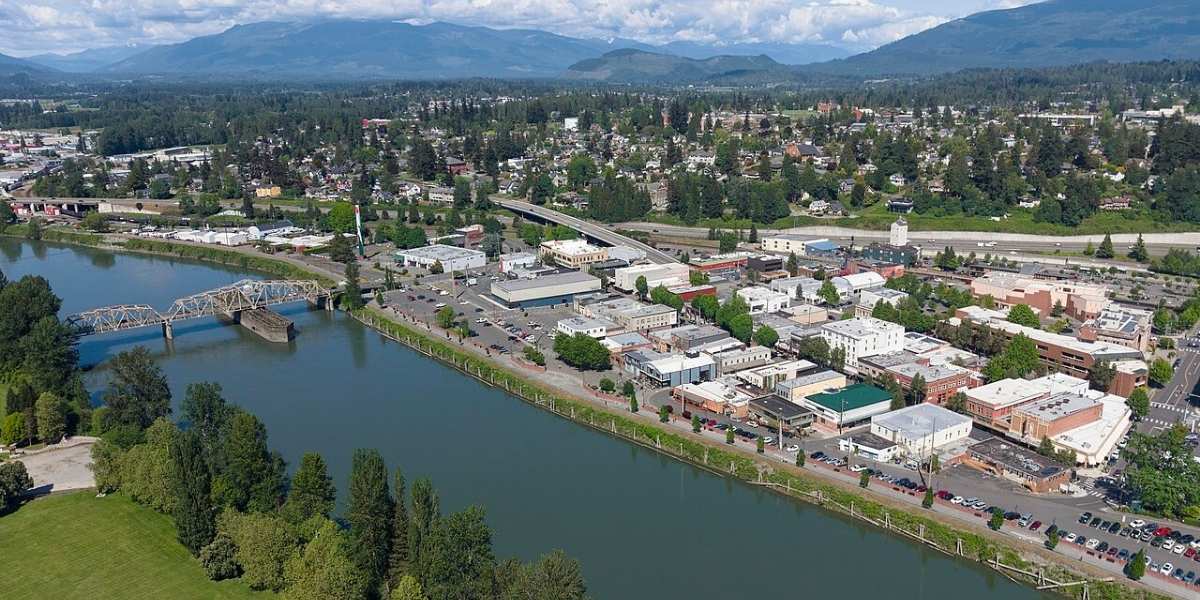
Mount Vernon is perhaps best known as the heart of the Skagit Valley’s famous tulip country.
To many Washingtonians, it’s a place they pass through on Interstate 5, visit during the annual Tulip Festival, or associate with farms, mountain views, and a quieter pace of life than Seattle or Bellevue.
Set along the Skagit River and surrounded by fertile farmland, Mount Vernon sits in a sweet spot between major cities and outdoor recreation. Seattle and Vancouver, B.C., are both within driving distance, while the North Cascades, San Juan Islands, and Puget Sound are practically in its backyard.
But what’s it actually like to live there?
That question recently surfaced online, where current and former residents shared their experiences. Their responses painted a picture of a community that many describe as beautiful, welcoming, and ideally located — but one that also faces rising housing costs, increasing traffic, and the challenges that come with growth.
A Small Town With Big Scenery
If there was one thing residents agreed on, it was the setting.
“The Skagit Valley is incredibly beautiful,” one resident wrote. “Mountains on all sides, lush dark green everywhere.”
Another described Mount Vernon as offering “the perfect mix of everything,” from outdoor recreation to a thriving small-town downtown.
Residents repeatedly praised the area’s access to nature.
“The best thing about Mt. Vernon is how central it is to so many different experiences,” one longtime local wrote. “Cities like Vancouver and Seattle just over an hour away. Massive peaks and volcanoes roughly an hour east, and world-class fishing and beautiful saltwater 20 minutes to the west.”
Others highlighted biking, fishing, hiking, kayaking, birdwatching, camping, mountain biking, and boating.
“Any direction you go in Mount Vernon, you will find something wonderful to do,” another resident wrote.
For many locals, Mount Vernon’s biggest selling point is that it offers access to many of the Pacific Northwest’s best attractions without requiring residents to live in a major metropolitan area.
The Downtown Wins People Over
Several residents singled out downtown Mount Vernon as one of the city’s biggest strengths.
One described it as an “adorable small town downtown.”
Another said the city features a “fabulous small-town downtown with art galleries, restaurants, locally-owned shops, and farmer’s market.”
Mount Vernon’s population is about 36,000 residents, according to the U.S. Census Bureau, large enough to support a vibrant downtown but small enough to maintain a close-knit feel.
Residents repeatedly described the community as quaint, walkable, and family-friendly.
Don’t Miss: Views Of 8 Islands: Skagit County’s Priciest Listing Also Has An Elevator, Sauna, And 7-Car Garage

Tulips, Farms And A Strong Local Identity
Agriculture remains deeply woven into the city’s identity.
The Skagit Valley Tulip Festival was mentioned repeatedly as a defining feature of life in the area.
“They have a tulip festival near Mt. Vernon that is very popular,” one resident noted.
Others praised the region’s farms, fresh produce, berry fields, farmers markets, and agricultural heritage.
“Access to locally grown produce and more berries than you can imagine,” one resident wrote.
Another added: “Don’t want to purchase berries? Harvest blackberries along the roads.”
The Biggest Complaints: Housing And Traffic
While residents clearly love the area, they were equally clear about what frustrates them.
“It’s pretty nice but has become unaffordable,” one longtime resident wrote.
Another echoed that sentiment. “Not cheap for housing.”
Housing costs have risen sharply throughout much of Western Washington, and Mount Vernon has not been immune.
The median value of owner-occupied housing units in Mount Vernon is approximately $465,000, according to Census Bureau data. While lower than many Puget Sound communities, residents repeatedly said prices have climbed beyond what many longtime locals expected.
Jobs, Industry And Growth
Several locals said Mount Vernon’s economy has benefited from a diverse mix of industries.
Agriculture remains important, but residents also pointed to oil refinery jobs, boat manufacturing, composites fabrication, healthcare, and tourism.
One resident said companies such as Janicki Industries and Hexcel have contributed to population growth in recent years.
The city’s median household income is roughly $75,000, according to Census Bureau data, below Washington state’s median household income of approximately $95,000.
That gap helps explain why some residents feel housing affordability has become more challenging despite steady economic growth.
Still, several locals described Mount Vernon as a practical home base for people who work remotely or commute regionally.
Weather Depends On Your Perspective
As with much of Western Washington, weather generated mixed reviews.
Residents agreed winters are generally mild. “Virtually no snow in the winters, just a considerable amount of rain.”
Others noted that gray skies can linger. “Grey weather for about 7 months of the year.”
But several residents described the changing seasons as one of Mount Vernon’s strengths.
“The weather is perfect with four distinct seasons,” one resident wrote before detailing the area’s blooming springs, mild summers, colorful falls, and relatively temperate winters.
Politics And Community
Residents described Mount Vernon and the surrounding Skagit Valley as politically mixed.
One longtime resident characterized the area as a blend of conservative and liberal viewpoints, noting that more conservative politics tend to become more common farther east in the valley while Democratic candidates typically perform well in local elections.
Despite those differences, commenters generally described Mount Vernon as community-oriented and welcoming.
Several praised local events, the farmers market, and opportunities to build connections.
So, What’s It Really Like Living In Mount Vernon?
The overwhelming sentiment was positive.
Residents described a city with stunning scenery, strong community ties, easy access to outdoor recreation, and a downtown that continues to win people over.
At the same time, they acknowledged growing pains, particularly when it comes to housing affordability and traffic.
For people who value nature, a slower pace, and proximity to both mountains and water, Mount Vernon appears to offer a lifestyle that many residents genuinely cherish.
As one longtime local put it: “10/10, love where I live.”