Whidbey Island occupies a unique place in Washington’s imagination.
To outsiders, it’s often seen as a slower, quieter alternative to life around Seattle — a place of beaches, forests, ferry rides, artists, small towns, and sweeping views of Puget Sound.
It’s also one of the state’s largest islands, stretching nearly 55 miles from north to south and home to communities that can feel surprisingly different from one another.
For some, Whidbey represents the dream of escaping city life. For others, it raises practical questions about ferries, isolation, jobs, and daily convenience.
But what’s it actually like to live there?
That question recently sparked a discussion among residents online. The responses revealed a community that many people deeply love, but one that comes with tradeoffs involving transportation, housing costs, military activity, and island life itself.
Home to roughly 70,000 residents, Whidbey Island offers a slower pace and strong sense of place that many locals say is difficult to find elsewhere. Yet residents also warned that life on the island requires patience, planning, and a willingness to embrace a different rhythm.
One Island, Two Very Different Worlds
One of the first things residents pointed out is that Whidbey isn’t a single experience.
Many locals described the north and south ends of the island as having distinct personalities.
“South end is quiet and boring. If that’s appealing?” one resident joked.
Others described the south end — including Clinton, Langley and Freeland — as peaceful, artsy, and community-focused.
“The town of Langley may be the most adorable place ever,” one resident wrote.
Another said the area feels slower and more relaxed.
“Life on Whidbey is what you make of it,” one resident wrote. “The most significant change for me was the overall speed of life. Things run pretty slow here. Island time is a real thing.”
The north end, centered around Oak Harbor, received a different description.
Several residents said Oak Harbor feels younger, busier, and more practical because of Naval Air Station Whidbey Island.
“Oak Harbor is bigger (but not large), and is where you’d get your groceries, hardware, do most of your shopping,” one resident explained.
Others described Oak Harbor as offering more restaurants, shopping, apartments, and services than the island’s southern communities.
The Beauty Is Real
If there was one point nearly everyone agreed on, it was Whidbey’s scenery.
Residents repeatedly mentioned beaches, forests, mountains, wildlife, fishing, crabbing, clamming, kayaking, hiking, and ferry views.
“It’s beautiful, and the sea is an integral part of the community,” one commenter wrote.
Residents highlighted easy access to Deception Pass, the Olympic Peninsula, and Puget Sound.
“The access to outdoor activities on the island is endless,” another resident wrote.
Several said spring is especially spectacular.
“Everything turns green, flowers bloom, and the island wakes up from its winter slumber.”

The Ferry Shapes Life
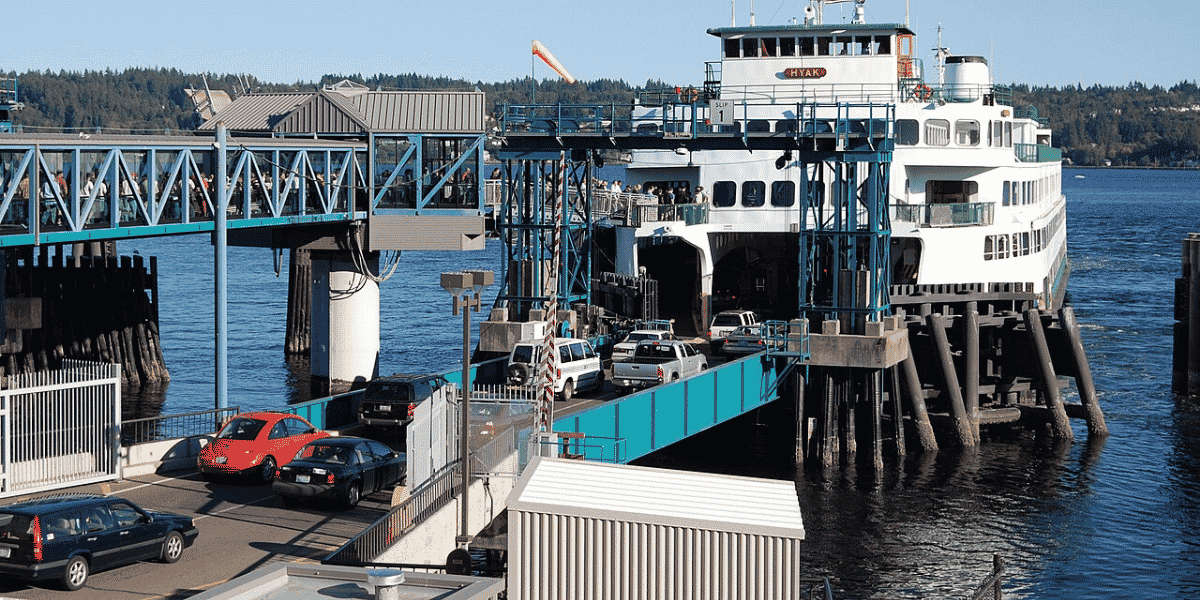
No topic generated more discussion than the ferry system.
For some residents, the ferry is simply part of island life.
Others described it as the single biggest factor affecting daily routines.
“The ferry schedule sets the mood for the day,” one resident wrote.
“When you roll right on with no waiting, you ride that high all day. But when you wait two hours to board the ferry, it really kills the vibe.”
Many residents said ferry delays, staffing shortages, cancellations, and seasonal backups can turn simple errands into major undertakings.
“If you can not live and die by the ferry, things are so much better here,” one commenter wrote.
Several south-end residents said they often drive north through Oak Harbor and across Deception Pass instead of dealing with ferry uncertainty.
The ferry can also affect housing decisions, employment choices, and even shopping habits.
“Costco, doctors, appointments — that’s what usually takes me off island,” one resident said.
Community Is A Major Draw
Many residents said Whidbey’s strongest asset isn’t its scenery, it’s the people.
“The sense of community has been amazing,” one resident wrote.
Another described Whidbey as “a peaceful life.”
“People say good morning to you and it’s a mellow life.”
Several residents who relocated from Seattle, California, Florida, and other states said they have no regrets about moving to the island.
“Zero regrets,” one resident wrote. “I don’t regret it at all,” said another.
Community groups, book clubs, trivia nights, volunteer organizations, and outdoor activities were repeatedly mentioned as ways newcomers build connections.
However, not everyone described the social environment positively.
Some residents said locals can be territorial or nosy.
Others warned that dating can be difficult and that remote workers sometimes struggle with loneliness.
“Remote is lonely as you really only see people when you go to the grocery store.”
Housing And Cost Of Living
Several residents said housing remains one of the island’s biggest challenges.
Rental inventory was described as limited, particularly on the south end.
“Rentals down here are very hard to find and expect to pay $2,000 or higher plus utilities,” one resident wrote.
That perception aligns with market data. Census estimates show owner-occupied housing values on Whidbey Island sit well above national averages, while housing supply remains constrained by geography and development patterns.
The median home sale price in Island County hovers between $570,000 and $631,000, according to Zillow. Meanwhile, the median household income is $90,000, just shy of the state median of $98,000.
Residents also noted that everyday expenses often run higher than on the mainland.
“Groceries, gas, shopping, veterinary expenses and basic necessities can be priced higher,” one resident said.
Others said ferry costs add another layer of expense for commuters and frequent travelers.
Jet Noise And Environmental Concerns
Life near Naval Air Station Whidbey Island received mixed reviews. Many residents acknowledged the economic importance of the base.
But others said aircraft noise can be significant.
“The jet noise is no joke,” one resident wrote.
Another said that during certain training exercises near Coupeville, “it’s almost impossible to hear yourself think.”
Environmental concerns also surfaced repeatedly.
Several residents mentioned groundwater contamination concerns tied to PFAS chemicals linked to historical firefighting foam use.
“As a community on Whidbey, we are all dependent on clean, safe groundwater,” one resident wrote.
Others advised prospective buyers to carefully research well water conditions before purchasing property in some parts of the island.
Weather, Power Outages And Island Life
Residents described Whidbey as relatively mild compared to many other parts of Washington. However, winter windstorms were frequently mentioned.
“We’re known for having high wind events and losing power in the winter,” one resident wrote.
Several residents said outages can last from a few hours to multiple days.
Despite those inconveniences, many said the slower pace ultimately outweighs the drawbacks.
“Love, love, love it,” one resident wrote.
Another said:
“Bald eagles, the sun setting on the sound, reading by a fireplace — I’m so happy here.”
So, What’s It Really Like Living On Whidbey Island?
The answer depends partly on where you live and how often you need to leave.
Residents describe Whidbey as beautiful, peaceful, community-oriented, and deeply connected to the outdoors.
They also describe it as slower, more expensive, and sometimes frustrating when ferry schedules, power outages, traffic, or jet noise become part of daily life.
For people seeking nightlife, convenience, and constant activity, island life may feel limiting.
For people looking for scenery, community, and a slower pace, many residents say it’s exactly what they’ve been searching for.
As one resident put it: “There are plenty of moments where I find myself pinching myself to remember how lucky I am to live here.”
Peek Inside: On Whidbey, $15 Million Gets You A Private Beach, Dock, And Enough Bedrooms For A Small Hotel