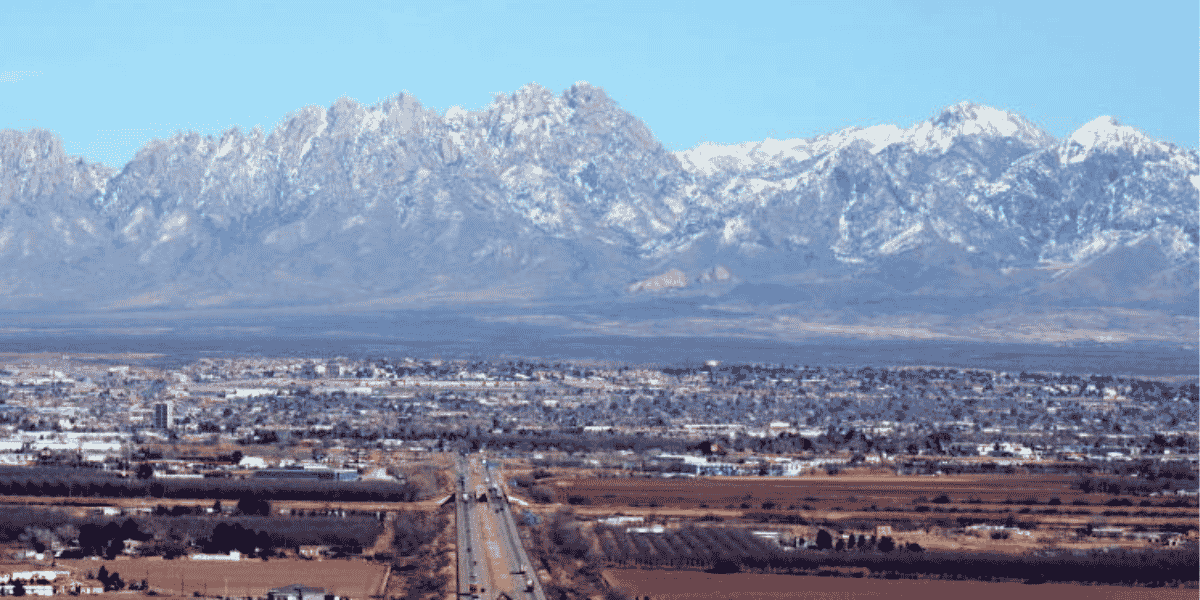
Las Cruces has a lot going for it: dramatic views of the Organ Mountains, winters that barely resemble winter by northern standards, New Mexican food worth planning a trip around and housing that still looks remarkably attainable compared with much of the West.
Then you ask people who live there what drives them nuts.
Spend enough time in Las Cruces discussion forums and the same complaints start appearing: jobs can be hard to find, specialized medical care can require a trip out of town, summer can feel like somebody left the oven door open, and people accustomed to bigger cities sometimes discover that their entertainment plan is essentially “drive to El Paso.”
Puget Press reviewed recent online discussions from residents, former residents and people considering moves to Las Cruces, then checked the recurring complaints against current government and housing data.
The result isn’t an argument that Las Cruces is a bad place to live. Plenty of locals fiercely defend it.
But here are nine drawbacks that came up again and again.
1. Finding a good job can be frustrating
This may be the single most practical warning for anyone considering Las Cruces without employment already lined up.
Residents repeatedly describe the job market as tight, particularly outside health care, education, government, trades and other established local industries. In a July 2026 Reddit discussion, several job seekers described months or even years of difficulty finding better work; one commenter working in Albuquerque said they had been trying to find something closer to home.
Another recent relocation thread offered essentially the same warning: Las Cruces can be a great place to live if you already have a job.
Federal numbers reinforce the concern.
The Las Cruces metropolitan area’s unemployment rate was 5.7% in June 2026, according to preliminary Bureau of Labor Statistics data. That compared with 5.1% statewide and 4.9% in Albuquerque.
Las Cruces isn’t an economic wasteland. New Mexico State University alone had more than 16,000 undergraduate and graduate students at its Las Cruces campus in fall 2025 and provides a substantial institutional presence in the city.
Still, somebody arriving with a secure remote job is playing a very different game from somebody arriving with three suitcases and plans to “find something.”
That distinction came up repeatedly among locals.
2. The wages and poverty numbers aren’t pretty
Cheap housing only gets you so far if the paycheck is also cheap.
The U.S. Census Bureau estimates Las Cruces’ median household income at $55,422, based on 2020-2024 data expressed in 2024 dollars. About 22.6% of residents live below the federal poverty line.
That’s roughly one in every 4½ residents.
Online discussions frequently connect the city’s affordability with its lower incomes. Residents describe Las Cruces as inexpensive compared with places like Austin, Seattle or Southern California, but some also complain that local salaries haven’t kept pace with rising housing costs.
That matters when newcomers see a $300,000 house and think they’ve discovered a bargain.
3. Housing isn’t as cheap as Las Cruces’ reputation suggests
Las Cruces remains relatively affordable by Western U.S. standards.
It just isn’t frozen in 2015.
Redfin reported a median home sale price of roughly $305,000 over the three months ending June 2026, up about 1.8% from the same period a year earlier.
The Census Bureau’s longer-term 2020-2024 estimate puts the median value of owner-occupied housing at $231,700 and median gross rent at $974, illustrating both Las Cruces’ historically lower housing costs and how quickly current purchase prices can diverge from multiyear averages.
Recent Reddit threads include locals complaining that newer homes routinely push past $300,000 and that rent has climbed sharply from what longtime residents remember.
4. The summer heat is not messing around
People moving to Las Cruces because they’re tired of rain should be careful what they wish for.
Southern New Mexico gets seriously hot.
The National Weather Service issued a heat advisory for Las Cruces in late July 2026 forecasting temperatures of 105 to 106 degrees across the Mesilla Valley.
Triple-digit forecasts continued into August. On Aug. 19, the Weather Service was calling for highs around 100 degrees for several consecutive days.
Residents in relocation threads repeatedly warn newcomers about extended stretches above 100 degrees, with outdoor activities often pushed to early morning during summer.
Yes, it is a dry heat. So is an oven.
The payoff is mild winters and an abundance of sunshine. For many residents, that’s a trade they’ll happily make.
But June through August is not decorative sunshine. It’s a lifestyle consideration.
5. And then there’s the wind, dust and relentless dryness
Heat wasn’t the only weather gripe in the discussions.
Locals also complained about wind, dust, dry skin, allergies and the general experience of living in a landscape where lush greenery is not part of the standard package.
A 2026 Reddit discussion about moving to Las Cruces included warnings about seasonal allergies as well as extreme summer heat. Other relocation threads tell newcomers to expect xeriscaped yards, desert vegetation, thorns and a very different environment from greener parts of the country.
Weather observations illustrate just how dry the air can become. At Las Cruces International Airport on Aug. 6, 2026, the National Weather Service reported 99 degrees with humidity of just 13%.
Some people adore the desert climate. Others discover that they miss grass, lakes and trees more than anticipated.
6. People complain that Las Cruces is boring
This one produces arguments almost every time somebody says it.
A January 2026 Reddit thread was literally titled “Cruces is boring,” with residents debating what the city lacks. Complaints centered on major concerts, nightlife, gathering places and a broader variety of restaurants and entertainment.
A separate 2026 relocation discussion described Las Cruces as pleasant but limited for people accustomed to larger cities, while defenders pointed to theater, jazz, museums, festivals, NMSU events and community activities that critics may simply be overlooking.
That’s probably the fairest interpretation.
Las Cruces isn’t devoid of things to do.
It has the Farmers & Crafts Market, local arts and music, New Mexico State University events, nearby Mesilla and excellent access to hiking, biking and desert recreation.
What it doesn’t have is the entertainment inventory of Austin, Phoenix, Denver or even nearby El Paso.
If your idea of a great Saturday is a hike, enchiladas and being home by 9:30, you may wonder why everyone is whining.
If you want touring bands, endless restaurant openings, major comedy acts and nightlife neighborhoods, you may start memorizing Interstate 10.
7. Specialized health care can be a headache
Health care is one of the more serious complaints, particularly among retirees and people considering Las Cruces as a long-term home.
Recent residents repeatedly described trouble finding certain specialists or said they travel to El Paso for more complex care. Other locals pushed back, saying their experiences with primary and specialty care in Las Cruces have been perfectly good.
The broader regional shortage isn’t imaginary.
New Mexico’s Department of Health has identified Southern Doña Ana County as one of the state’s Health Professional Shortage Areas with substantial unmet primary-care needs, and federal HRSA listings also identify shortage areas and facilities within Doña Ana County.
That doesn’t mean Las Cruces has no doctors or hospitals.
It means access to particular providers can be limited enough that proximity to El Paso becomes an important safety valve.
For younger residents, that may be a minor inconvenience.
For somebody choosing a retirement destination because they’d like access to cardiologists, oncologists or other specialists without turning every appointment into a road trip, it deserves considerably more attention.
8. Crime and property theft worry some residents
Las Cruces’ crime reputation produces almost as much disagreement as its boredom reputation.
Some Reddit users describe crime as a serious drawback. Others say they’ve lived in the city for years without feeling unsafe and believe outsiders greatly exaggerate the problem.
The police department’s own numbers show both a real crime problem and recent improvement.
Las Cruces Police recorded 583 violent crimes in 2025, down 19% from 719 in 2024. Property crimes declined 12%, from 5,582 to 4,897.
Within that property-crime total were 835 auto burglaries, 760 vehicle thefts and 1,417 misdemeanor shoplifting offenses in 2025.
Police separately say that nearly 1,100 firearms have been reported stolen in Las Cruces since 2020, with most reportedly taken from vehicles.
So “everyone in Las Cruces is constantly dodging bullets” is internet nonsense.
“Don’t leave expensive stuff sitting in your car” is much more defensible advice.
And the broader economic picture matters here too: with more than 22% of residents living in poverty, some of the visible homelessness, addiction and property-crime concerns residents describe exist alongside substantial economic hardship.
9. Las Cruces can feel isolated — and getting somewhere bigger often means driving
Las Cruces has roughly 117,000 residents, according to the Census Bureau’s July 2025 estimate, so we’re not talking about a desert outpost with one gas station and a suspiciously busy Dairy Queen.
But residents repeatedly describe it as a place where bigger-city amenities require leaving town.
That usually means El Paso.
The City of Las Cruces itself tells travelers seeking interstate passenger flights to use El Paso International Airport, about a 45-minute drive from downtown.
Las Cruces International Airport briefly had subsidized scheduled passenger service to Albuquerque, but the city ended that service June 30, 2026, after grant funding was exhausted. The route had been costing the city about $130,000 a month while averaging six passengers per flight, according to city officials.
Public transportation exists and has one major advantage: RoadRUNNER Transit buses are zero-fare. The system serves major shopping, employment and health care destinations around the city.
But recent residents still describe Las Cruces as highly car-oriented, and some bus routes operate only every 30 to 60 minutes.
On the upside, traffic isn’t exactly Seattle at 4:45 p.m.
The Census Bureau estimates Las Cruces workers average just 18.9 minutes commuting to work.
So owning a car is often useful.
At least you won’t spend half your natural life sitting in it.
Why plenty of locals love Las Cruces anyway
Read only the complaints and Las Cruces sounds like an overheated desert town where nobody has a job, a doctor or anything to do.
That’s not remotely the full picture.
Some of the most enthusiastic comments came from people who moved to Las Cruces from larger or more expensive places and discovered that they loved the slower pace. Recent residents praised the friendly community, spectacular Organ Mountain views, hiking, New Mexican food, mild winters and ability to get across town quickly.
The city is also growing rather than emptying out. Census estimates put Las Cruces’ population at 116,978 in 2025, up about 5% from the 2020 estimate base.
That helps explain the split personality in online discussions.
Las Cruces makes much more sense for certain people than others.
A remote worker who likes hiking, sunshine, quiet evenings and green chile — and doesn’t mind driving to El Paso for an occasional flight or specialist — might consider the city dramatically underrated.
Someone chasing a deep professional job market, major concerts, dense urban neighborhoods, endless restaurant choices and Seattle-level greenery may discover fairly quickly that the Organ Mountains can’t solve everything.
And that may be the most useful thing locals say about Las Cruces: don’t move there expecting a cheaper version of Austin, Denver or Phoenix.
Las Cruces is very much Las Cruces.
Whether that’s the problem or the selling point depends almost entirely on who’s unpacking the boxes.