Living in South Fulton gives residents room to spread out, relatively attainable homeownership and quick access to Atlanta’s airport—but it can also mean long drives, limited shopping and frustration with city services.
Those themes appear repeatedly in relocation forums, Reddit conversations, local news coverage and the city’s own planning documents. Online comments are anecdotal, not a scientific survey, but the same subjects come up often enough to show what residents and prospective homebuyers are weighing.
South Fulton is also a complicated place to summarize. The 85-square-mile city includes established neighborhoods, newer subdivisions, busy commercial corridors and areas that still feel surprisingly rural. Someone living near Camp Creek Parkway may describe a very different city than a homeowner farther south.
Here are the five biggest advantages and five most common complaints about living in South Fulton.
What People Love About Living in South Fulton
5. The city still has room to grow
South Fulton is young, both as a government and as a developing suburban city. Residents approved incorporation in 2016, and the city formally began operating in 2017.
That newness creates growing pains, but it also gives residents a chance to influence what comes next. The city completed an updated comprehensive plan in April 2026 covering transportation, development, public services and preservation of the area’s rural character.
Residents participating in that process asked for mixed-use developments, technology jobs, trails, restaurants, grocery stores and more walkable neighborhoods, according to the city’s 2026 comprehensive plan materials.
The wish list is long, which could be viewed as a complaint. It also shows that South Fulton has something many established suburbs lack: space where new ideas can still become actual buildings.
4. Parks and greenery break up the suburbs
People who want a yard without moving too far from Atlanta often find South Fulton appealing.
The city operates more than 20 parks and natural areas covering over 400 acres, according to the South Fulton Development Authority. Sandtown Park, Creel Park and Welcome All Park are among the better-known recreation sites.
That park system complements the city’s lower-density neighborhoods and undeveloped land. Parts of South Fulton feel much farther from central Atlanta than they actually are.
Online discussions frequently mention the area’s open space, trees and newer subdivisions as advantages over denser parts of the metro area. The trade-off, as residents quickly discover, is that peaceful surroundings and walkable convenience rarely arrive in the same package.
3. It offers a strong sense of Black community
South Fulton is one of the country’s largest predominantly Black cities. Black residents accounted for nearly 90% of its population in the 2020 census.
That identity is a major draw for many families and professionals seeking established Black neighborhoods, civic leadership and cultural life. Online relocation discussions often describe South Fulton as a place with substantial middle- and upper-middle-class Black communities that outsiders overlook.
The city’s identity is not merely demographic. It appears in community events, churches, businesses, neighborhood organizations and public discussions about building generational wealth.
South Fulton does not fit the simplistic picture sometimes painted in metro Atlanta forums. It includes expensive homes, working-class neighborhoods, rural land, industrial property and nearly everything between them. Anyone describing all of it with one adjective probably has not driven very far.
2. Homeownership remains within reach for more families
Housing is one of the most common reasons people consider living in South Fulton.
The median value of an owner-occupied home was $309,800 during the Census Bureau’s 2020–2024 reporting period. About 71.5% of occupied homes were owner-occupied, well above the rate inside the city of Atlanta, according to U.S. Census Bureau QuickFacts.
That does not make South Fulton cheap. Home values have climbed, and the median monthly housing cost for owners with mortgages reached $1,806. Median gross rent was $1,702.
Still, relocation discussions routinely note that a buyer’s budget can secure more house, more yard or newer construction in South Fulton than in many northern Atlanta suburbs or popular intown neighborhoods.
For families focused on ownership, that difference can outweigh a longer commute or a thinner restaurant lineup. Granite countertops cannot defeat traffic, but they have persuaded people to tolerate it.
1. The airport and Atlanta remain close
South Fulton’s location may be its clearest practical advantage.
The city sits southwest of central Atlanta, with access to major routes including Interstate 285, Interstate 85, South Fulton Parkway and Camp Creek Parkway. Hartsfield-Jackson Atlanta International Airport is nearby, making the area attractive to airline employees, frequent travelers and people working around the airport.
Residents can also reach MARTA rail stations in College Park and East Point, although much of South Fulton requires a drive to get there.
Living south of Atlanta can be especially useful for people whose jobs and routines are also on the south side. The arrangement becomes much less charming when work requires a daily trip to Buckhead, Sandy Springs or another northern employment center.
In metro Atlanta, “How far is it?” is usually the wrong question. The correct question is, “How far is it at 5:15 p.m. on a Thursday?”
What People Hate About Living in South Fulton
5. School quality depends heavily on the address
Schools generate some of the strongest opinions in discussions about living in South Fulton.
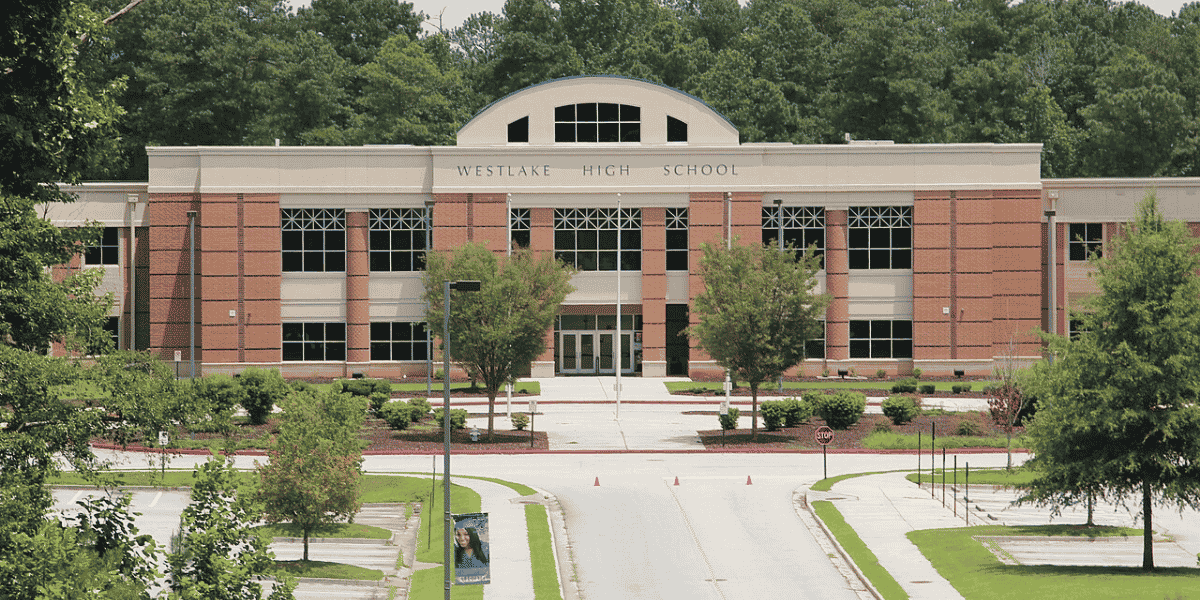
The city is served by Fulton County Schools, but families’ experiences vary among individual attendance zones and programs. Some residents speak positively about particular schools, including Westlake High School, while others tell prospective buyers to examine test results, graduation rates and school climate carefully.
Older online discussions can be especially misleading. School boundaries, leadership and performance change, sometimes significantly, while forum comments remain searchable for decades.
Families should verify a home’s current attendance zone through Fulton County Schools and review the latest state report cards before making a decision. A subdivision’s mailing address does not guarantee assignment to the school a real estate advertisement casually mentions.
The recurring complaint is not that every local school performs poorly. It is that families cannot assume a consistent experience across such a large city.
4. Public safety carries a stubborn reputation
Concerns about crime appear regularly in relocation forums, especially in discussions involving Old National Highway and some of the city’s busier commercial areas.
Those concerns should not be applied evenly across South Fulton. The city covers more than 85 square miles, and conditions differ considerably from one neighborhood to another.
Recent numbers also complicate the reputation. An analysis of FBI data found that violent crime in South Fulton fell 26% in 2024. South Fulton Police Department statistics through the middle of 2025 showed reported Part I offenses running 12% below the same period a year earlier, including declines in robbery, burglary, theft from vehicles and auto theft.
The police department publishes weekly crime statistics, which are more useful to prospective residents than broad online declarations about whether the entire city is “safe” or “dangerous.”
Crime remains a legitimate concern, particularly in specific corridors. But neighborhood-level research provides a more accurate picture than South Fulton’s online reputation alone.
3. Residents want more stores, restaurants and services
One of the most consistent complaints is that South Fulton has plenty of rooftops but not enough destinations.
Residents responding to the city’s comprehensive-planning process requested more sit-down restaurants, grocery stores, entertainment venues, health care facilities and mixed-use development. Several comments specifically called for fewer repetitive fast-food, dollar-store, liquor-store and beauty-supply developments.
Those requests mirror relocation discussions in which residents praise their homes but complain about driving elsewhere for dining, specialty shopping or entertainment.
The issue is not a complete absence of retail. Camp Creek Marketplace and businesses near neighboring College Park, East Point and Union City provide options. The frustration is that South Fulton’s size and population have not produced the variety some residents expect.
The city had more than 107,000 residents at the 2020 census. At that scale, wanting more than another drive-thru is not an unreasonable civic ambition.
2. City services and politics can test residents’ patience
South Fulton is still building the systems of a full-service city, and some residents believe progress has been too slow.
Complaints about road maintenance, code enforcement, customer service, public safety and other municipal functions became serious enough that some homeowners pursued detachment from the city. Residents involved in that effort told WSB-TV that dissatisfaction with city services motivated them.
Political disputes have added to the frustration. Highly publicized conflicts involving elected officials can make ordinary administrative problems feel larger and more permanent.
South Fulton operates police, fire, parks, public works, planning and several other departments. Fulton County and private providers remain responsible for some other services, which can leave residents uncertain about whom to call.
That division is manageable once residents learn it. Until then, solving a basic problem can feel like being transferred through every government office in Georgia.
Taxes sharpen the debate. South Fulton’s municipal property-tax rate was 12.399 mills in 2025, before county and school taxes were added. A mill equals $1 in tax for every $1,000 of assessed value, although exemptions and Georgia’s assessment rules affect the final bill.
Residents are generally more accepting of taxes when roads, code enforcement and emergency services feel responsive. When they do not, every pothole starts looking itemized.
1. Most daily life requires a car
The biggest frustration with living in South Fulton is not simply traffic. It is how difficult life can be without driving.
The average commute was 32.5 minutes during the Census Bureau’s 2020–2024 measurement period. That is an average, meaning plenty of residents spend considerably longer traveling during peak periods.
Major roads provide useful connections, but congestion can build around Interstate 285, Camp Creek Parkway, Old National Highway and routes leading toward the airport. A commute across the metro area can quickly erase the savings from buying a less expensive home.
Public transportation exists, but rail service does not extend across most of the city. Many residents must drive to reach a MARTA station, store, restaurant, school or park.
Walkability also emerged repeatedly in the city’s 2026 planning process. Residents requested more sidewalks, trails, bicycle routes and mixed-use areas where daily errands would not require another trip through traffic.
A large yard is lovely. Needing the car to buy milk is less poetic.
Is Living in South Fulton Worth It?
South Fulton works best for people whose priorities match what the city already offers: homeownership, larger lots, Black community, suburban quiet and access to the airport and Atlanta’s south side.
It is a harder sell for people seeking highly walkable neighborhoods, abundant independent restaurants, rail service outside their doorstep or a short commute to the northern suburbs.
The sharp differences among neighborhoods also make personal research essential. Prospective residents should test their commute at the time they would actually travel, confirm school assignments, examine police data and visit nearby stores before buying.
Living in South Fulton comes with real compromises. It also offers more economic and cultural variety than its reputation suggests—and enough potential to keep residents arguing about what it should become next.