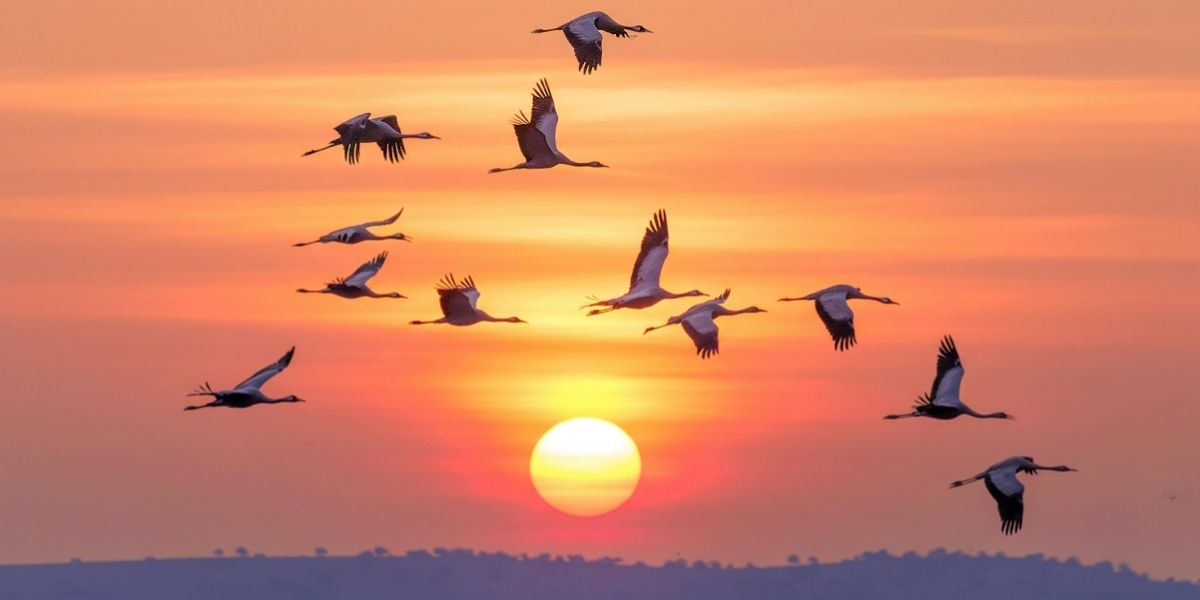
Your late-night lights could be confusing millions of birds flying over Washington right now.
A surge of migratory birds is expected to pass over Washington in the coming nights, prompting researchers to urge residents to turn off non-essential lights to help protect migrating wildlife.
Data from BirdCast shows that large waves of birds are moving across the United States this week, including hundreds of thousands over Washington on any given night, with numbers expected to climb into the millions by the weekend.
Researchers say most bird migration happens overnight, when species travel long distances under the cover of darkness. In Washington, spring migration typically peaks between late April and mid-May, making the coming weeks especially critical.
Artificial light is one of the biggest threats during this journey, scientists say. Bright lights from buildings, homes, and street fixtures can disorient birds, drawing them off course and increasing the risk of exhaustion or collisions with glass structures.
To reduce those risks, experts are encouraging people across Washington to take part in the “Lights Out” effort by dimming or turning off unnecessary lighting overnight.
“Artificial light attracts birds, disrupting their migrations and drawing them close to hazards like buildings and glass,” researchers with BirdCast said.
Forecasts show migration activity increasing steadily:
- Thursday night: about 845,000 birds over Washington
- Friday night: about 2.9 million birds
- Saturday night: about 4.1 million birds, with higher activity expected in western and central parts of the state
The “Lights Out” recommendation typically applies between 11 p.m. and 6 a.m., when migration activity is highest.
Researchers also recommend closing blinds or curtains, using motion sensors or timers, and switching to lower-intensity, warm-colored bulbs to reduce light pollution.
BirdCast and Purdue University’s AeroEco Lab use radar and environmental data to track migration patterns in real time, helping identify peak travel nights and areas where birds are most at risk.
The spring migration season runs through mid-June, and experts say even small actions by residents can make a significant difference in protecting birds during their journey.
Find more information from Purdue AeroEco Lab.
Want more local news? Follow Puget Press on Facebook.