
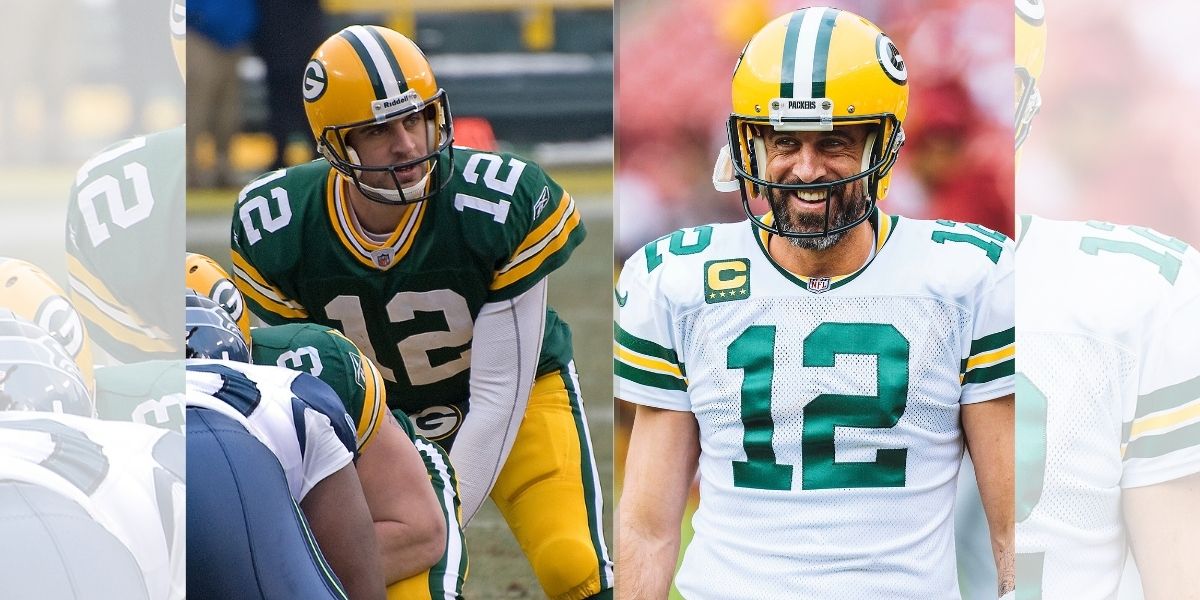
Aaron Rodgers says the upcoming NFL season will officially be the final chapter of one of football’s most decorated careers.
The four-time NFL Most Valuable Player confirmed Wednesday, May 20, that he plans to retire after the 2026 season, ending months of speculation about whether he would return for a 22nd year in the league.
“Yes, this is it,” Rodgers told reporters when asked if the season would be his last.
The 42-year-old quarterback signed a one-year contract earlier this week to return to the Pittsburgh Steelers after helping lead the team to an AFC North title and playoff appearance last season.
Rodgers said he wrestled with doubts about continuing his career before eventually deciding to come back following Pittsburgh’s hiring of head coach Mike McCarthy, his longtime coach during his years with the Green Bay Packers.
“I thought that was probably it for me in Pittsburgh,” Rodgers told reporters. “But when the decision was made to hire Mike, I started opening my mind back up to coming back.”
Rodgers finished last season with his best completion percentage and passer rating since 2021 while throwing 24 touchdown passes.
He enters what is expected to be his final season already cemented as one of the most accomplished quarterbacks in NFL history.
Rodgers ranks tied for first all-time in passer rating, fourth in passing touchdowns, and fifth in passing yards. He also became known for rarely turning the ball over despite being one of the highest-volume passers of his era.
Over 8,700 career pass attempts, Rodgers has thrown interceptions on just 1.4% of his passes — tied for the best mark in NFL history.
Much of Rodgers’ legacy was built in Green Bay, where he spent nearly two decades after initially serving as Brett Favre’s backup for three seasons.
He led the Packers to a Super Bowl victory following the 2010 season and was named Super Bowl MVP. Rodgers also won league MVP honors in 2011, 2014, 2020, and 2021.
His rise to NFL superstardom was far from traditional.
After receiving little attention out of high school in Chico, California, Rodgers attended Butte College, a junior college in Northern California, before transferring to the University of California, Berkeley, where he emerged as a top NFL prospect.
Beyond football, Rodgers became one of the league’s most polarizing and talked-about stars because of his outspoken personality, highly publicized relationships, media appearances, and controversial comments on topics ranging from COVID-19 vaccines to politics and alternative health practices.
Even with the controversy surrounding parts of his career, Rodgers is widely expected to become a first-ballot Pro Football Hall of Famer once eligible.


