Gig Harbor has a reputation that practically markets itself.
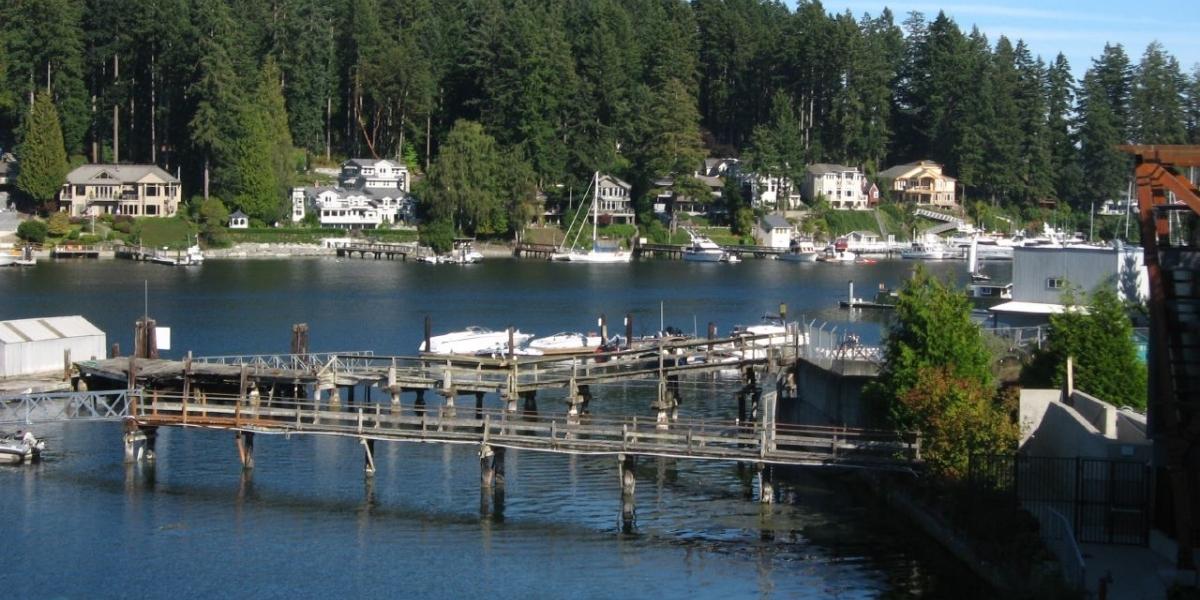
To some, it’s a postcard-worthy waterfront town filled with boats, boutique shops and views of Mount Rainier. To others, it’s an affluent suburb where Teslas, pickup trucks and million-dollar homes somehow coexist.
Mention Gig Harbor anywhere in Western Washington and you’ll usually hear the same words: beautiful, safe, expensive, and quiet.
One resident summed it up in four words: “Like a Hallmark movie.”
But what’s it actually like to live there?
That question recently sparked a lively discussion among locals, transplants and longtime residents. Their answers painted a picture of a community that many people genuinely love — but one that comes with tradeoffs that aren’t always obvious from a weekend stroll along the waterfront.
Beautiful, Quiet And Close To Nature
The strongest theme throughout the discussion was simple: people think Gig Harbor is gorgeous.
“It’s beautiful and quiet,” one resident wrote.
Another called it “beautiful, charming, and surrounded by nature.”
For many residents, access to the outdoors is the biggest reason to live there.
“I can see bald eagles, cormorants, blue herons, river otters, seals, sea lions, sometimes orcas, sail boats, and shipping traffic,” the resident wrote.
Others highlighted nearby hiking opportunities, beaches, waterfront walks and dog parks.
“The best dog park is in GH,” one resident declared.
The city’s appeal is reflected in its growth. Home to roughly 12,700 residents according to US Census estimates, Gig Harbor has become one of Pierce County’s most sought-after communities.
Many residents said the combination of water, trees, and relative quiet is difficult to find elsewhere.
“It’s super quiet around town,” one transplant from Texas wrote. “It’s clean and right on the water.”
The Small-Town Feel People Love
For many families, Gig Harbor feels like a place where life moves a little slower.
Residents repeatedly described it as safe, family-oriented, and community-focused.
“It’s quiet and safe,” one resident wrote.
Another family that recently moved from Seattle said they were drawn by the community atmosphere.
“GH seems to be growing but it is nothing compared to the crush of King County and the town itself is friendly, cute and wholesome.”
Many residents praised the schools, parks, YMCA, farmers market and family-friendly amenities.
“We definitely feel safer and love the great schools and smaller town feel,” one newcomer wrote.
Others pointed to community events, waterfront festivals, and local gathering spots that help maintain a sense of connection despite the area’s growth.
Then People Start Talking About The Cost
Not every comment was glowing. One of the most common complaints involved affordability.
“It’s expensive to live here,” one resident said bluntly.
Another wrote: “If you work in Gig Harbor, it can be really hard to afford to live in Gig Harbor.”
That perception aligns with housing data. The median home value in Gig Harbor exceeds $825,000, substantially higher than the national average and well above many nearby communities.
Residents also complained about newer developments.
“A lot of the newer house developments up for sale are the cookie cutter you’re-so-close-to-your-neighbor-that-you-can-touch-their-house-from-your-window,” one resident wrote.
Others described the community as increasingly expensive as demand continues to grow.
“It is beautiful. It is overpriced,” another resident said.

The Food? Locals Seem To Agree
It’s rare to find a community discussion where residents broadly agree on anything. Gig Harbor’s restaurant scene may be the exception.
Again and again, locals used nearly the exact same word.
“Food is meh.”
“The food options are meh.”
“There are 2 maybe 3 decent restaurants in the area.”
“Nothing extraordinary.”
Several residents said they routinely drive into Tacoma when they want more dining options.
One transplant who ultimately moved to Tacoma said he found himself “constantly going into Tacoma for things.”
A newer resident said: “I’ve also enjoyed exploring Tacoma when I want a drink or a meal after the places in GH close.”
Which brings up another recurring theme.
Everything Closes Early
For younger residents and people who enjoy nightlife, Gig Harbor may feel limiting.
“There is no nightlife,” one resident wrote.
Another said: “Things close down at 8p if you’re lucky.”
Others noted that most businesses shut down relatively early, especially during winter.
“The city pretty much shuts down at night.”
That wasn’t necessarily viewed as a negative by everyone. Many families and retirees seemed perfectly happy with the quieter atmosphere.
But younger singles and people accustomed to urban living often described needing Tacoma or Seattle for entertainment.
“It’s either family or elderly, no real in between,” one former resident wrote.
A 37-year-old newcomer from Nashville offered a similar assessment: “It’s definitely more of a family-oriented community.”
Friendly? Snooty? Both?
Perhaps the most fascinating aspect of the discussion was how differently residents described the people.
Some described Gig Harbor as welcoming. “The people are generally very friendly.” “The people couldn’t be nicer.”
Others had a different experience. “People aren’t super welcoming.” “The general population [is] disingenuous and fake AF.”
One resident called the city “welcoming and judgy as hell.”
“As an openly transgender woman with a young child,” she wrote, “I can walk around and people will be friendly and smile.” But she also said she receives “the evil eye often” from some longtime residents.
Another commenter described the area as: “Very WASPy. Lots of Botox.”
Others repeatedly used words like “bougie,” “snooty,” and “old money.”
One resident summarized Gig Harbor’s identity crisis this way:
“The folks to the north and west think GH is over populated bougie Tesla newcomers, the folks across the bridge eastwards think it’s country with combo boat and pickup truck fetish.”
In other words, Gig Harbor means different things depending on who you ask.
Growth Is Creating New Tensions
Many longtime residents said growth is changing the city faster than infrastructure can keep up.
Traffic came up repeatedly. “Traffic is getting worse.”
“The roads [are] not being expanded.”
“If the freeway gets stuck, the whole city gets stuck.”
At the same time, several transplants from larger metro areas said Gig Harbor traffic hardly registers.
“If you are moving from a large metro area, the traffic in GH will be a relief,” one former Houston resident wrote.
The same debate emerged around population growth. Some residents welcomed younger families and new businesses.
Others worried schools, roads and public services are struggling to keep pace.
“Most [schools] are already on the brink of overpopulation and we can’t keep up with how many new families are moving in,” one commenter wrote.
So What’s It Really Like Living In Gig Harbor?
The answer depends heavily on what you’re looking for.
If you want waterfront views, safety, outdoor recreation, good schools and a slower pace of life, Gig Harbor checks a lot of boxes.
If you want diversity, nightlife, walkability, late-night restaurants and big-city energy, residents say you may find yourself crossing the bridge to Tacoma more often than you’d like.
Locals disagreed on politics. They disagreed on the people. They disagreed on growth.
But they agreed on one thing: Gig Harbor is changing.
For some, that’s exciting. For others, it’s frustrating.
And for many residents, it’s simply home.
Or, perhaps the most fitting description: “Gig Harbor is meh. But that’s not a bad thing.”