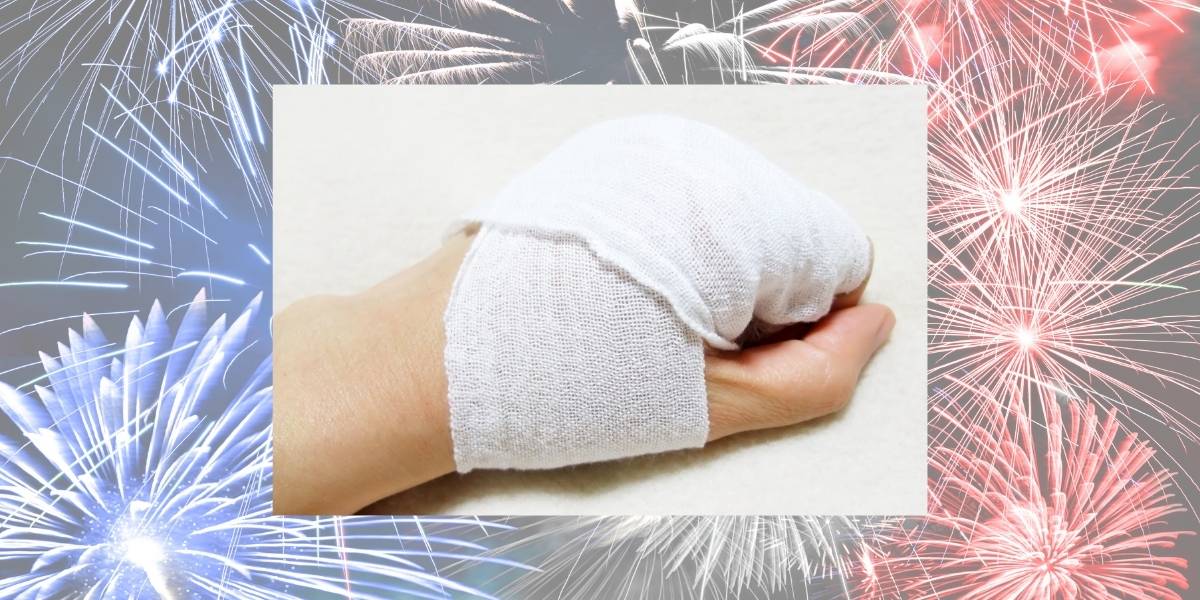
Every Fourth of July, thousands of Americans head to emergency rooms with firework-related injuries ranging from minor burns to blindness and amputations.
Nobody plans to spend Independence Day searching the yard for a missing finger, but doctors say knowing what to do in those first few minutes can make a major difference.
Here’s your emergency playbook — hopefully one you’ll never need.
If You Lose A Finger, Don’t Put It Directly On Ice
This is one of the biggest mistakes people make.
If a finger, toe or other body part is severed:
- Find the body part if it’s safe to do so.
- Wrap it in moist, sterile gauze.
- Place it in a clean plastic or sterile bag.
- Put that bag on ice.
Do not place the body part directly on ice. Direct contact can damage tissue and reduce the chances that surgeons can successfully reattach it.
Then get to the nearest emergency room immediately.
And yes, this is your official reminder that fireworks and alcohol are a terrible combination.
If You Burn Yourself
First-Degree Burns
Think mild sunburn.
- Run cool — not cold — water over the area.
- Cover it with a moist, sterile dressing.
- Over-the-counter pain medication can help.
Second-Degree Burns
These burns often blister and damage deeper layers of skin.
- Run cool water over the injury for about 10 minutes.
- Cover it with a moist, sterile, non-fluffy dressing.
- Seek medical attention if the burn is larger than the victim’s palm.
Don’t pop blisters.
Don’t slather butter, oil or random kitchen remedies on it. Grandma means well, but your skin deserves better.
Third-Degree Burns
This is a medical emergency.
The skin may appear charred, white or leathery. Surprisingly, the victim may not feel severe pain because nerve endings can be damaged.
- Call 911 immediately.
- Remove clothing near the burn unless it’s stuck to the skin.
- Cool the injury with water for at least 10 minutes.
- Cover it with a moist, sterile, non-fluffy dressing.
Do not apply ointments.
Do not break blisters.
Do not try to tough it out.
If Something Gets In An Eye
Fireworks don’t have to explode in your hand to cause serious injuries.
A spark, ember or piece of debris in the eye can cause permanent damage.
If this happens:
- Cover the eye with a plastic cup or similar object to create a protective shield.
- Do not rub the eye.
- Do not flush it with water.
- Do not apply ointment.
- Go to the nearest emergency department immediately.
In this situation, Google is not your doctor.
Before You Light The Fuse
The best way to save a finger is to keep all 10 of them.
Safety experts recommend:
- Never hold fireworks while lighting them.
- Never throw fireworks toward people, homes or dry vegetation.
- Pull long hair back.
- Avoid loose clothing.
- Don’t allow children younger than 5 to light fireworks — including sparklers.
Yes, even sparklers.
Those innocent-looking sticks can burn at temperatures of roughly 2,000 degrees Fahrenheit — hot enough to melt some metals.
Build A Fireworks Emergency Kit
Before the first firework goes off, experts recommend keeping these items nearby:
- A bucket of water or a hose
- A bucket of dirt
- Sterile dressings
- Medical gloves
- A wool blanket to smother flames
- A plastic cup for eye injuries
It’s also a good idea to have someone with basic first-aid knowledge nearby and, perhaps most importantly, someone who is sober enough to drive to the hospital if things go sideways.
One Final Thought
The Fourth of July should end with burgers, fireworks and maybe a few mosquito bites — not a trip to the trauma center.
But if the unthinkable happens, those first few minutes matter.
And if you remember only one thing from this article, make it this: