Most people assume a murder charge requires the defendant to fire the fatal shot.
But under Washington law, a person can still be charged with murder if prosecutors believe they set in motion the chain of events that caused someone’s death.
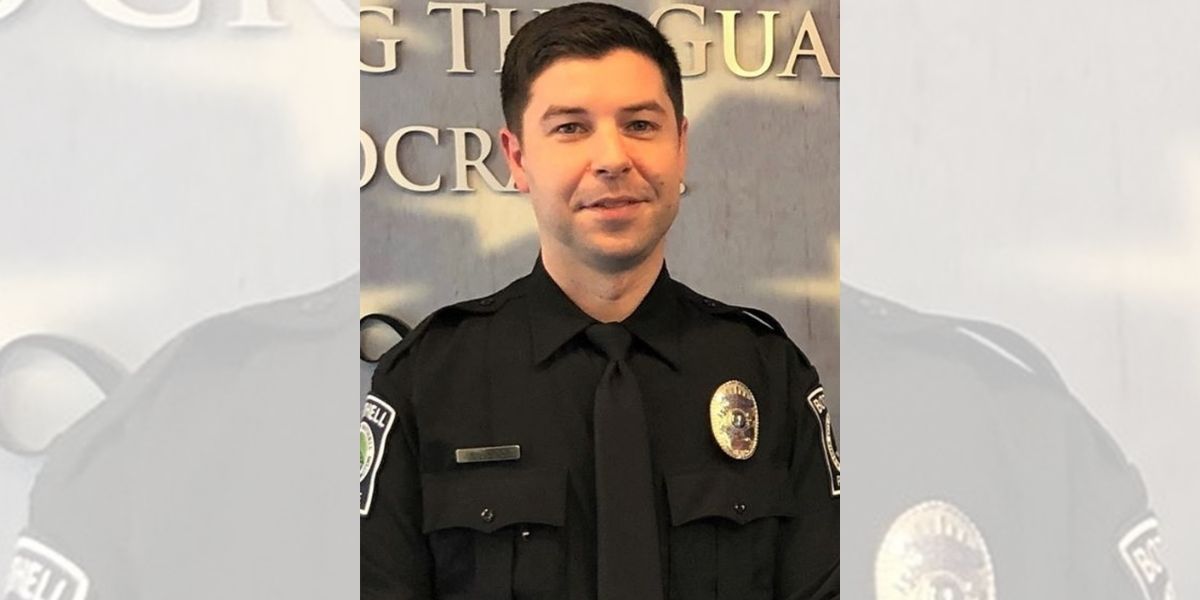
That’s the legal theory at the center of the long-running case against Henry Eugene Washington, the man accused in the 2020 shooting that led to the death of Bothell Police Officer Jonathan Shoop.
King County prosecutors on Friday refiled charges against the 43-year-old, arguing that years of competency treatment have restored him sufficiently to stand trial.
Washington is charged with aggravated first-degree murder in Shoop’s death, attempted first-degree murder for the shooting of Officer Mustafa Kumcur, and vehicular assault for allegedly striking a pedestrian while fleeing the initial traffic stop.
Prosecutors also alleged firearm sentencing enhancements on the murder and attempted murder charges.
A Deadly Traffic Stop
According to charging documents, Shoop and Kumcur stopped Washington’s vehicle on July 13, 2020, near the intersection of state routes 522 and 527 in Bothell after noticing it had no license plates or trip permits.
Shoop was driving the patrol vehicle while Kumcur, then a trainee, sat in the front passenger seat.
Prosecutors allege Washington sped away from the stop, striking 20-year-old pedestrian Jalen Irvin, who was legally crossing the street on a scooter.
Court records state that Irvin suffered a broken leg after being hit by the vehicle.
According to prosecutors, Washington then drove across a median before stopping nearby.
The probable cause certification incorporated into the new charges alleges that Washington exited his vehicle armed with a handgun, walked toward the stopped patrol car and fired through the driver’s side window.
Witnesses told investigators that Washington shouted, “Come on pigs,” as he approached the officers, according to court documents.
Authorities allege Washington fired first, prompting the officers to return fire from inside the patrol vehicle.
So Why Is He Charged With Murder?
Investigators concluded that the bullet that killed Shoop did not come from Washington’s gun.
Instead, authorities determined that Washington’s bullets shattered the driver’s side window and struck Kumcur’s firearm, causing a bullet fired by Kumcur during the exchange to fatally strike Shoop in the head.
That finding immediately raised a question that still surprises many people today: How can someone be charged with murder if another person fired the fatal shot?
Under Washington law, prosecutors can pursue murder charges if they believe a defendant’s actions directly caused or set in motion the events that led to another person’s death.
The legal focus is not always on who fired the fatal bullet, but whether the defendant’s alleged conduct foreseeably caused the death.
Prosecutors argue that by allegedly fleeing the traffic stop, confronting the officers and opening fire on the patrol vehicle, Washington initiated the deadly gunfight that resulted in Shoop’s death and therefore remains criminally responsible.
The charging documents also allege that Washington later admitted to detectives that he intentionally fired into the patrol car and intended to shoot the officer inside, though he claimed he acted in self-defense.
Prosecutors dispute that claim and allege the evidence shows Washington deliberately confronted the officers after fleeing the stop.
A Case Delayed For Years
The criminal case has taken a lengthy and unusual path through the court system because of questions surrounding Washington’s competency to stand trial.
Court records show prosecutors initially filed charges in 2020. The case was dismissed without prejudice in October 2023 after 360 days of attempted competency restoration.
Washington was then civilly committed to Western State Hospital.
Prosecutors refiled the case in 2024 after receiving reports that he had stabilized, but it was dismissed again after he was found incompetent and returned to civil commitment.
According to the latest court filing, Washington remains under civil commitment, which is scheduled to expire in July 2026.
Why Prosecutors Refiled The Case
Prosecutors say treatment records from Western State Hospital and Maple Lane indicate Washington has consistently taken prescribed medication, participated in treatment, completed supervised community outings and demonstrated an understanding of his mental illness and the need for ongoing care.
Court records also state that Washington had been accepted to the University of Phoenix and planned to begin classes in June while continuing outpatient mental health and substance use treatment.
Based on those developments, prosecutors now contend that Washington is competent to proceed with the criminal case.
They have asked the court to hold him without bail, arguing that the charges carry potential life sentences and that the allegations demonstrate a substantial danger to the community.