Every diet eventually inspires the same fantasy.
What if you could demolish a dozen glazed donuts, polish off a large pepperoni pizza, and chase it with a milkshake—without your body absorbing a single calorie?
It’s a ridiculous idea, but it’s also a surprisingly fun scientific question. What if your throat had a switch that diverted junk food into a separate container instead of your stomach?
You’d still enjoy every bite, but none of it would make its way into your digestive system.
It sounds like something dreamed up during a late-night snack run. At first glance, the underlying biology is more interesting than you might expect.
The idea isn’t as crazy as it sounds
Calories don’t magically appear the moment food touches your tongue.
In fact, digestion begins before you even swallow. Simply smelling or tasting food triggers what’s known as the cephalic phase of digestion, causing your brain to signal the release of saliva, stomach acid and digestive enzymes in anticipation of a meal.
Your mouth lets you taste food, but that’s not where your body absorbs most of its calories. Digestion really gets going in the stomach, while the small intestine does the heavy lifting when it comes to absorbing fats, carbohydrates and proteins.
The vast majority of calorie absorption happens much farther down the digestive tract, particularly in the small intestine, according to the National Institute of Diabetes and Digestive and Kidney Diseases .
So if someone could somehow reroute food before it reached your stomach, your body would absorb very little from it. On paper, the basic premise actually works.
That’s where the good news ends.
Your throat isn’t a set of plumbing pipes

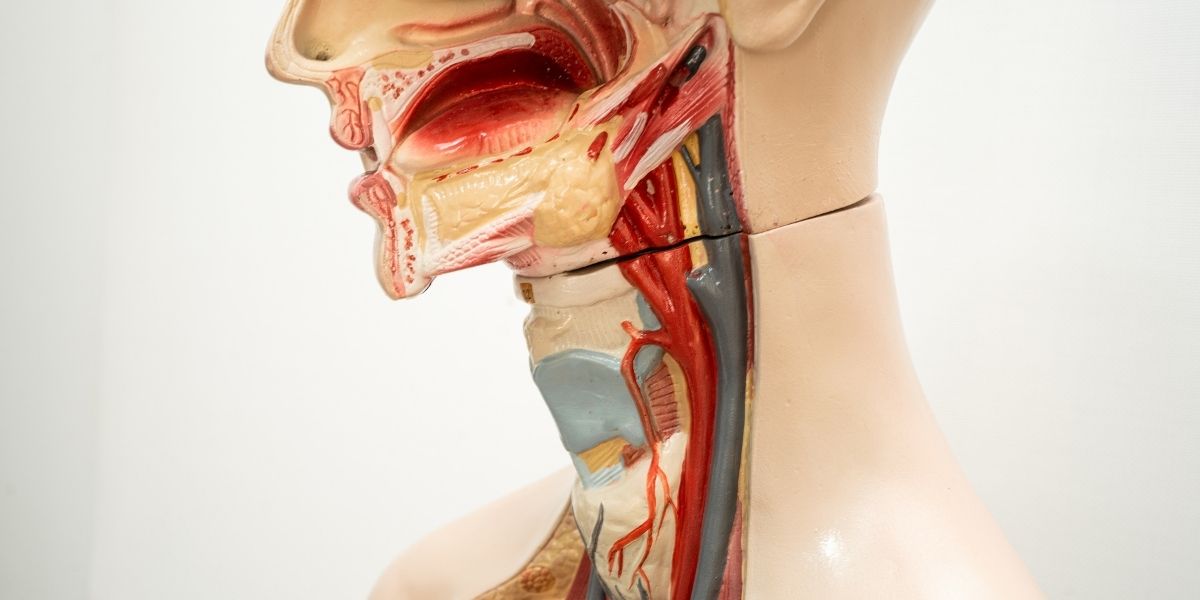
Your throat already performs one of the most impressive juggling acts in the human body.
Every time you swallow, dozens of muscles coordinate to send food into your esophagus while keeping it out of your lungs.
The epiglottis briefly folds over your airway, your vocal cords move into position and your brain orchestrates the whole process so quickly you barely notice.
The average person swallows somewhere between 500 and 700 times every day, often without realizing it. That’s because the entire process is so efficient that it usually happens without a second thought.
When that system slips up, you cough because something “went down the wrong pipe.” Most people have experienced it, and it’s miserable.
Now imagine replacing that elegant system with a mechanical switch.
Instead of choosing between your airway and your stomach, your throat would suddenly need a third route leading to a removable container. It sounds simple until you remember that your body isn’t built like a railroad junction.
One small mistake could be deadly
This is where the fantasy crashes into reality.
A device like this couldn’t be “pretty reliable.” It would have to be virtually perfect every single time.
One failure could send food into the lungs instead of the esophagus. Besides choking, food particles can introduce bacteria into the lungs, potentially leading to aspiration pneumonia—a serious infection doctors work hard to prevent in people with swallowing disorders.
Then come the less glamorous questions.
Engineers would have to build a device that safely rerouted food thousands of times a year without leaking, clogging, breaking or accidentally sending lunch into your lungs.
Suddenly the idea starts sounding less like a clever gadget and more like a medical nightmare.

Medicine has actually chased similar ideas
Believe it or not, doctors have spent decades trying to help people absorb fewer calories.
Weight-loss surgeries such as gastric bypass and sleeve gastrectomy physically change the digestive system so patients eat less or absorb fewer nutrients.
Another treatment, called aspiration therapy, allowed certain patients to drain a portion of stomach contents after eating through a medical tube. The FDA approved aspiration therapy in 2016 for certain adults with obesity, although the device is no longer marketed in the United States.
Neither approach rerouted food through the throat, and that’s probably not a coincidence.
Surgeons generally avoid fixing body parts that already work remarkably well unless there’s no better option.
Your brain would probably spoil the fun anyway
Let’s pretend every engineering problem magically disappeared.
You might still end up disappointed.
Eating isn’t just about taste. As food reaches the stomach, stretch receptors and the vagus nerve begin sending signals to the brain that a meal has arrived.
Researchers have identified hormones such as GLP-1 and peptide YY as important signals that help regulate hunger and fullness after eating.
Take all of that away, and your brain may simply conclude that you haven’t had lunch yet.
Imagine finishing your fantasy box of donuts only to feel just as hungry as when you started. That would be a cruel twist.
So… could it ever happen?
Science has produced artificial hearts, robotic limbs, and brain implants that help people communicate. It’s dangerous to say anything is absolutely impossible.
But a “junk food switch” for your throat falls into the category of ideas that are technically imaginable yet wildly impractical.
According to Johns Hopkins Medicine, swallowing relies on dozens of muscles and multiple cranial nerves working together in a carefully timed sequence that most people never notice.
Building a machine that could improve on that system would be an enormous challenge.
For now, if you want to enjoy pizza without the calories, you’ll have to settle for smelling it—or exercising a little self-control.
On second thought, maybe just have the pizza.