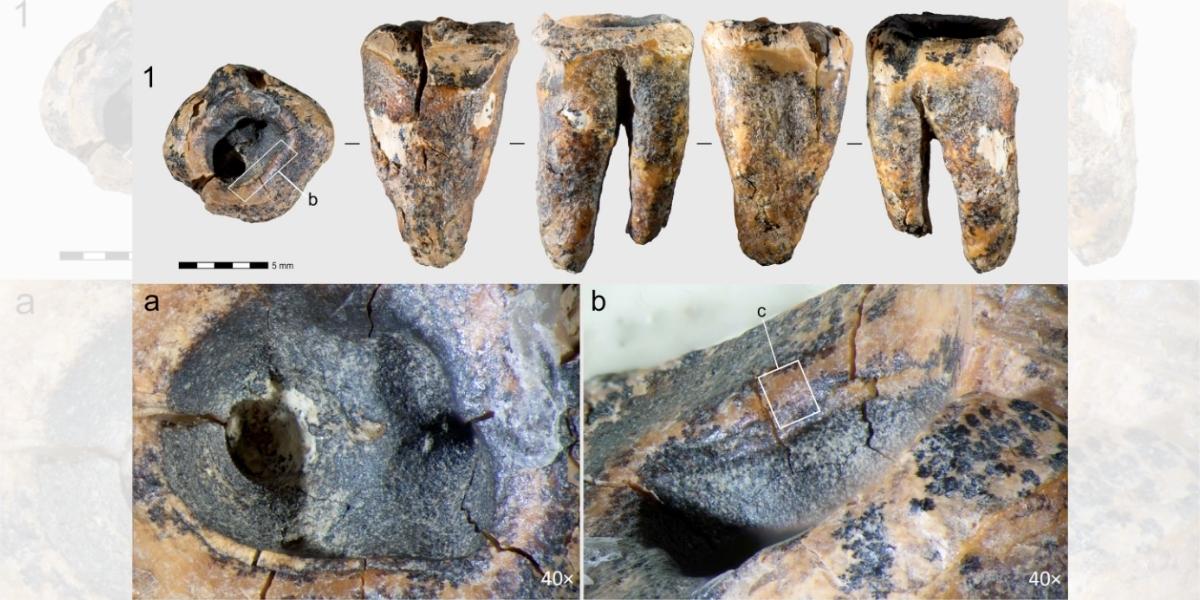
Neanderthals living in what is now southwestern Siberia may have used stone tools to treat painful cavities nearly 60,000 years ago, according to a newly published study that researchers say could represent the earliest known evidence of invasive dental treatment.
The study, published Wednesday, May 13, in the journal PLOS One, analyzed a heavily worn molar discovered in Chagyrskaya Cave in Russia’s Altai Mountains. Researchers concluded the tooth showed signs of deliberate drilling or scraping performed while the individual was still alive.
The tooth contained a large cavity-like concavity extending into the pulp chamber, along with microscopic markings consistent with repeated rotational movements from a sharp stone tool, researchers said.
“This is indicative of the earliest documented instance of caries treatment involving the drilling/rotating with a lithic perforator,” the authors wrote.
Researchers estimated the procedure occurred roughly 59,000 years ago.
The team recreated the process using replica stone tools and modern human teeth. According to the study, researchers were able to drill into teeth and reach the pulp chamber in under an hour using small pointed stone tools similar to those recovered from the cave.
Scientists said the findings suggest Neanderthals may have understood the source of tooth pain and intentionally attempted to relieve it.
“The Chagyrskaya Cave Neanderthals possessed the cognitive capacity to intuit the source of pain, comprehend the feasibility of its elimination, and deliberately select the most efficacious dental intervention,” the authors wrote.
The study also found evidence the individual regularly used toothpicks, with grooves and microscopic scratches preserved on the tooth’s surface. Researchers said those markings appeared separate from the more invasive dental work.
Neanderthals have long been known to care for injured and sick members of their groups, but researchers said this discovery pushes that understanding further by suggesting intentional medical intervention rather than instinctive behavior alone.
The researchers cautioned that the exact procedure cannot be known with certainty. Still, they said the shape of the cavity, the presence of microscopic tool marks, and the absence of natural explanations strongly support the theory that the tooth was intentionally modified.
Want more news? Follow Puget Press on Facebook.