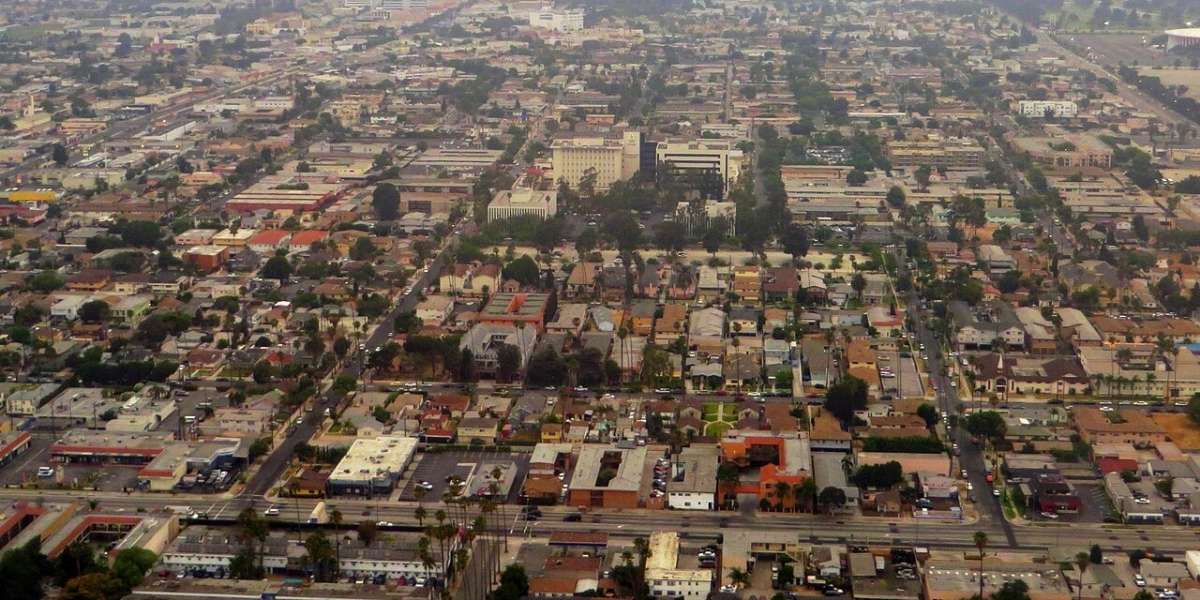
Inglewood, California, is one of those places where reputation and reality are fighting in the street — and SoFi Stadium is somehow directing traffic.
To outsiders, Inglewood still carries an old image shaped by 1990s rap lyrics, crime concerns and the phrase “Inglewood always up to no good.”
To residents, the answer is far more complicated.
“It is not Inglehood anymore,” one commenter wrote in a Los Angeles Reddit discussion.
Another local offered a more practical warning: “All of Inglewood isn’t the same.”
That may be the whole story.
Inglewood is changing fast. The city has about 105,000 residents, sits minutes from LAX and is now home to SoFi Stadium, the Kia Forum and the Intuit Dome.
It is also preparing for an even brighter spotlight as SoFi Stadium hosts 2026 World Cup matches and major events during the 2028 Olympics.
But beneath the stadium lights, residents describe a city dealing with the price of transformation: traffic, gentrification, safety concerns, rising housing costs and the uneasy feeling that Inglewood is becoming something new before everyone who built it gets to decide what comes next.
The City Is Changing Fast
For decades, Inglewood was known more for its reputation than its amenities.
That changed when massive investment poured into the city.
SoFi Stadium opened in 2020 as part of Hollywood Park, a 300-acre development billed as one of the largest mixed-use projects in the western United States.
Intuit Dome, the new home of the Los Angeles Clippers, added another major venue to the city’s sports and entertainment boom.
Residents notice the difference.
“Inglewood will be a whole new city in just a couple of years,” one commenter wrote.
Another said the city has “come a long way,” especially with the Olympics and World Cup ahead.
That momentum is real. City leaders are using the World Cup and Olympics to help rebrand Inglewood as safer, friendlier and more vibrant after decades of being associated with poverty, crime and 1990s gangsta rap imagery.
The challenge is that rebrands do not come with a mute button.
The Traffic Is Not A Minor Detail
If there is one modern Inglewood complaint that comes up again and again, it is traffic.
“So. Much. Traffic,” one local wrote. “So many events.”
Another resident warned that areas near the stadium can get “loud/crowded.”
That is the tradeoff of becoming an entertainment capital.
Living near SoFi Stadium, the Forum or Intuit Dome can mean quick access to world-class events. It can also mean game-day gridlock, concert crowds, blocked streets and the special joy of realizing your grocery run is now competing with 70,000 football fans.
Inglewood is no longer just a city people drive through.
It is a city people drive into — all at once.
Safety Depends Heavily On The Block
The most repeated answer from locals was not “Inglewood is safe” or “Inglewood is dangerous.”
It was: it depends where you are.
Residents described North Inglewood and areas near Westchester as more comfortable, while others warned that some areas still feel rougher, especially at night.
“The area is relatively safe,” one commenter wrote. “It has some areas better than others though.”
Another put it more bluntly: “The fact that you have to go block-by-block to determine safety is probably not a good sign.”
The data shows why the reputation lingers. NeighborhoodScout, using FBI-reported crime data, describes Inglewood’s violent crime rate as high compared with communities of all sizes and estimates the chance of becoming a victim of violent crime at 1 in 149.
It estimates the chance of property crime at 1 in 28.
At the same time, violent crime has fallen dramatically from the early 1990s, when the city recorded more than 2,500 violent crimes in some years, to fewer than 700 in recent years.
So both things can be true: Inglewood is safer than its old reputation, and locals still tell newcomers to check the exact block before signing a lease.
The Old Reputation Still Follows It
Inglewood’s reputation did not come from nowhere.
The city became nationally known through music, sports and pop culture. For many older Angelenos, it also became associated with the crime and economic struggles of the 1980s and 1990s.
One Reddit commenter said older residents remember that era and still carry the old perception.
Another joked that Inglewood is “not as dangerous as you’d think if you only listen to early 90s hip hop and/or Fox News.”
That line lands because it gets at the weirdness of Inglewood’s public image.
Some people still talk about it like it is frozen in 1993. Residents say it is not.
“It’s changed a whole lot,” one commenter wrote.
Another said: “It definitely ain’t as bad as it used to be.”
The Cost Of Living Is No Joke
For a city long seen as more affordable than nearby coastal and Westside communities, Inglewood is now expensive in its own right.
The city’s median household income was $72,750 from 2020 to 2024, while the poverty rate was 14.6%, according to the U.S. Census Bureau. The average commute was about 30.5 minutes.
Housing is the bigger shock.
Census Reporter lists the median value of owner-occupied housing units in Inglewood at about $798,300, which is higher than the California median and more than double the national figure.
That helps explain why residents keep bringing up gentrification.
“Inglewood has gentrified hard and fast since SoFi,” one commenter wrote.
Another said the city is “becoming more and more gentrified because of the new stadiums/event centers.”
Translation: the city once dismissed by outsiders is now expensive enough to make those same outsiders check Zillow and whisper, “Wait, seriously?”
The Culture Is One Of Its Biggest Strengths
Inglewood is not just stadiums and traffic cones.
The city has deep Black and Latino roots, and residents repeatedly described it as community-oriented, diverse and more neighborly than its reputation suggests.
One person who worked in the school district said “the community at large was an actual community that knows each other well and supports one another.”
Another resident said they would “proudly live/work in Inglewood.”
That matters because many comments defending Inglewood pushed back against coded language about safety and race. Several locals said people sometimes mistake diversity, density or working-class neighborhoods for danger.
One commenter put it plainly: “The area is still largely African American/Latino, so if you stand out/aren’t comfortable in that kind of environment, people will catch on to that more than you being a woman.”
That is a sharp line, but it reflects a real theme: some of Inglewood’s reputation says as much about outsiders as it does about the city.
It Is Not A Tourist Brochure
For all the positive change, locals did not pretend Inglewood is perfect.
Residents mentioned car break-ins, property crime, homelessness, rougher pockets, event-night chaos and the need to stay aware at night.
One commenter offered the classic Los Angeles survival rule: “Don’t walk alone at night in places you shouldn’t be.”
Another summed it up with a line that could apply to half of Los Angeles: “Inglewood ain’t Westwood but just be chill.”
That may be the most accurate resident advice in the thread.
Inglewood is not Beverly Hills. It is not Manhattan Beach. It is not Brentwood.
And if someone is moving from Brentwood, as one commenter noted, “Brentwood to Inglewood is quite the transition.”
Another joked: “Prada to Nada.”
Harsh? Yes. Useful? Also yes.
So What’s It Really Like Living In Inglewood?
According to locals, Inglewood is changing, complicated and deeply neighborhood-dependent.
It is safer than its old reputation, but not free of safety concerns.
It is more expensive than people expect, but still more attainable than many nearby coastal areas.
It has major venues, global events and huge investment, but also traffic, displacement fears and growing pains.
For some people, Inglewood is a smart bet before the Olympics and World Cup push it even further into the spotlight.
For others, it is still too rough around the edges.
But almost everyone agrees on one thing: Inglewood is not the punchline it used to be.
As one resident put it: “It’s not Inglehood anymore.”