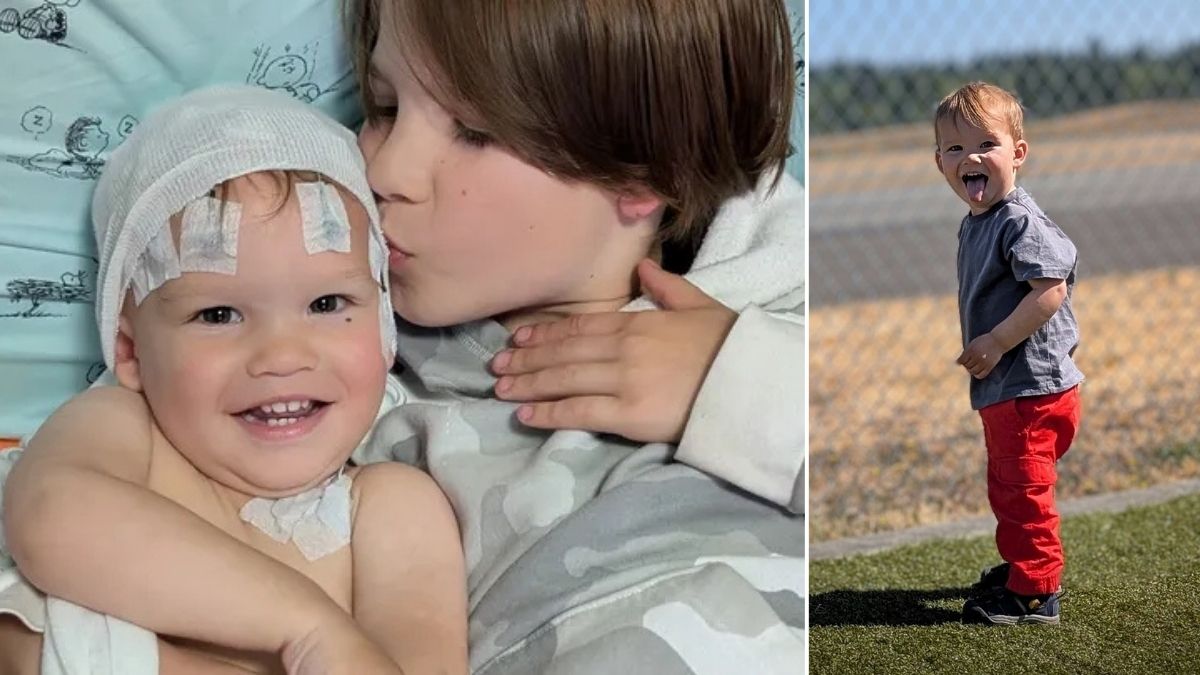
A Tacoma family is rallying for help to give their 20-month-old son, Archie — affectionately nicknamed “Bum Bums” — a chance at greater safety as he faces a devastating form of epilepsy.
Since he was five months old, Archie has been fighting Dravet Syndrome, a rare and catastrophic form of epilepsy marked by prolonged seizures resistant to medication, severe developmental delays, and a high risk of sudden unexpected death in epilepsy (SUDEP).
His family says the odds are stark: children with the condition face a 20 to 30 percent risk of dying from SUDEP, often in their sleep.
Archie’s mother Betty Pavlas recalls his first terrifying seizure at six months old. What she thought was a simple febrile episode turned into a 40-minute medical emergency and his first Code Blue in the ER. In the months that followed, he endured more long seizures, including episodes triggered by swimming.
Then in April 2025, Archie contracted COVID-19, and his condition worsened. While playing in the backyard, he seized and collapsed face-first into a small bucket of water. His parents pulled him out and called 911.
He spent days in the pediatric ICU. Afterward, he began experiencing a new, dangerous type of seizure known as “drop seizures,” in which he suddenly collapses without warning.
“On a bad day, Archie can have over 100 of these face-plant seizures, which makes it hard to do anything,” Pavlasy wrote on a GoFundMe campaign. “Despite all of that, he always gets up like nothing happened.”
For now, Archie’s life is carefully controlled to avoid risks. His family avoids playgrounds, pools, and even breezes or bright light, which can trigger seizures. Much of his day is spent in strollers, hiking carriers, or carpeted rooms to prevent injuries.
The Next Step: A Service Dog
To give Archie more safety and independence, his family is raising money to purchase and train a service dog. The dog would be trained to detect oncoming seizures, retrieve rescue medication, and even cushion Archie’s falls.
At night, when SUDEP risk is highest, the family hopes the dog will serve as a life-saving alert system while Archie sleeps.
“Despite high-tech seizure cameras and pulse eximetry, nighttime is still very scary for us,” Pavlas said. “My hope is to move him into his own bed he would share with Doggo (but still in our room) and he would alert us.”
The family has found a reputable Standard Poodle breeder with experience producing service dogs and hopes to begin training as soon as possible.
How To Help
The fundraiser is collecting donations to cover the cost of the service dog and training. Those who wish to support the family can donate via GoFundMe here.
Want more local news? Follow Puget Press Tacoma on Facebook.